Sciatica basics
What Is Sciatica? Causes, Symptoms and Red Flags
Sciatica is a set of symptoms, not a diagnosis: pain, tingling or numbness that follows the sciatic nerve from the lower back into one leg. A herniated disk, spinal stenosis or piriformis syndrome is the usual cause. Somewhere between 10% and 40% of people get it in their lifetime, and most flares settle within 4 to 6 weeks.
Written by the SciatiEase label deskUpdated
The basics01
What is sciatica?
Sciatica is the name for pain, tingling, numbness or weakness that runs along the path of the sciatic nerve. It is a symptom of pressure on, or damage to, that nerve or the roots that form it (MedlinePlus, Sciatica).
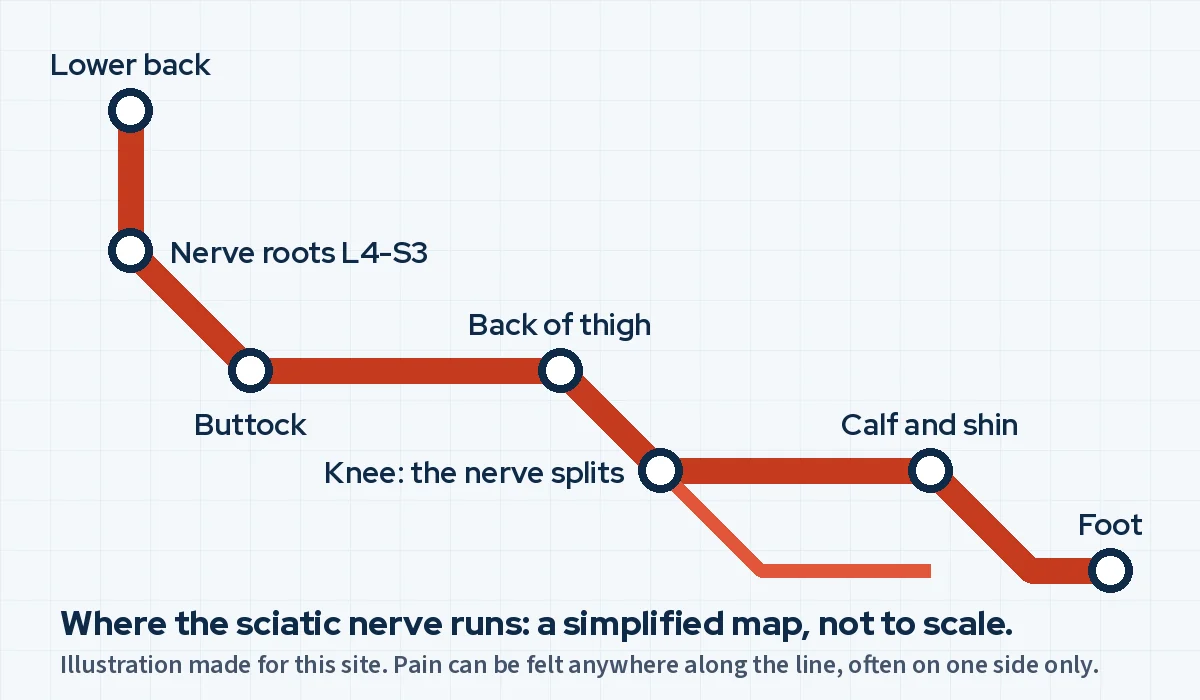
The sciatic nerve is the longest nerve in the body. It forms from several roots that leave the lower spine, joins up in the buttock, and runs down the back of the thigh before it splits near the knee.
Along the line02
Where is sciatic nerve pain felt?
Sciatic nerve pain is usually felt in the buttock and down the back of one leg, sometimes as far as the foot. Many people notice more in the leg than in the back itself.
The feeling varies. Some describe a dull ache, others a sharp jolt like an electric shock, and others pins and needles or a patch of numb skin. Coughing, sneezing or long sitting can make it flare.
- Lower back: a mild ache, or nothing at all.
- Buttock: a deep ache that sitting makes worse.
- Back of the thigh: shooting or burning pain.
- Calf and shin: pins and needles or numb patches.
- Foot: tingling toes, or a foot that drags when weakness sets in.
Causes03
What causes sciatica?
Most sciatica is caused by a herniated disk, spinal stenosis or a tight piriformis muscle pressing on the nerve. MedlinePlus names these three as the usual causes (MedlinePlus, Sciatica).
A herniated disk is the classic one. The soft center of a spinal disk bulges out and presses on a nerve root. Spinal stenosis, a narrowing of the canal, is more common with age. Piriformis syndrome happens when a muscle deep in the buttock squeezes the nerve.
Less often, pain along the same route comes from an injury, an infection or a growth. Those causes are rare, but they are why fever, weight loss or pain after a fall need a doctor.
| Cause | What happens | Typical clues |
|---|---|---|
| Herniated disk | Disk material presses on a nerve root in the lower back | Often younger and middle-aged adults; worse with sitting, bending or coughing |
| Spinal stenosis | The spinal canal narrows and crowds the roots | More common later in life; legs tire with walking and ease when you sit or lean forward |
| Piriformis syndrome | A buttock muscle tightens over the nerve | Deep buttock ache, worse sitting on a hard seat |
| Injury, infection or growth | Something else presses on or harms the nerve | Rare; pain after a fall, fever or unexplained weight loss (MedlinePlus, Sciatica) |
How long it lasts04
How common is sciatica, and how long does it last?
Sciatica is common, and most cases fade within 4 to 6 weeks without long-term problems. StatPearls puts lifetime incidence at 10% to 40%, with 1% to 5% of people affected in any given year (StatPearls, Sciatica).
Back pain in general is the second most common reason Americans see a health provider, after colds and flu (MedlinePlus, Low back pain (acute)). Many people feel better within a week.
- Days 1-7
Pain is often at its worst. Many people already notice it easing by the end of the first week (MedlinePlus, Low back pain (acute)).
- Weeks 2-6
Most flares settle in this window, even without medical treatment (StatPearls, Sciatica).
- After 4 weeks
If pain has not eased, MedlinePlus says to call your provider (MedlinePlus, Sciatica).
- Months later
Leftover or returning pain is common in the long run (StatPearls, Sciatica). A plan for staying active helps you meet the next flare sooner.

SciatiEase: from $49 a bottle120 capsules · 1, 3 or 6 bottles · free US shipping on 3 or 6 · 180-day guarantee
See packsRed flags05
What are the red flags for sciatica?
The red flags for sciatica are bladder or bowel changes, numbness in the groin or inner thighs, weakness that keeps getting worse, symptoms in both legs, and pain after a fall or with fever. The first two can mean cauda equina syndrome, an emergency.
In cauda equina syndrome, the bundle of nerve roots at the bottom of the spine is squeezed hard. Trouble passing urine is the most common sign (AANS, Cauda Equina Syndrome). Reduced feeling around the genitals and buttocks shows up in up to 93% of patients (StatPearls, Cauda Equina Syndrome).
Speed matters. Surgery within 48 hours gives the best chance of keeping bladder, bowel and leg function (StatPearls, Cauda Equina Syndrome).
- Bladder or bowel changesCannot pass urine, or leaking urine or stool
- Saddle numbnessNumb groin, inner thighs or buttocks
- Leg weakness getting worseFoot drop, stumbling, a leg giving way
- Both legsPain or numbness in both legs at once
- After a fall or with feverPain after an injury, or with fever or weight loss
See a doctorLeg pain that lasts more than a few weeks, keeps you from sleeping or working, or keeps coming back deserves an exam. A supplement should not delay it.
Go nowLoss of bladder or bowel control or numbness between the legs can mean cauda equina syndrome, an emergency. Call 911 or go to an emergency room.
Red flags from StatPearls and MedlinePlus (StatPearls, Cauda Equina Syndrome) (AANS, Cauda Equina Syndrome) (MedlinePlus, Sciatica).
At the clinic06
What does a doctor do for sciatica?
A doctor confirms that the pain is sciatica, looks for red flags, and then usually starts with nondrug care. For most people that means heat, staying active and a plan to build back up.
The visit is mostly talk and a hands-on exam. Scans are usually kept for red flags or for pain that does not settle, because most flares improve on their own (StatPearls, Sciatica).
If you want medicine, the American College of Physicians lists anti-inflammatory pain relievers or muscle relaxants as options after nondrug steps (ACP guideline, Annals 2017).
History
Where the pain runs, when it started, what makes it worse, and any bladder, bowel or fever symptoms.
Exam
Strength, reflexes and skin feeling in each leg, plus how the leg reacts when lifted straight while you lie down.
A plan
Heat, movement and a return to normal days, with medicine or physical therapy if needed. Details are in the sciatica self-care guide.
A follow-up mark
A date to come back if pain is not easing, sooner if weakness or numbness spreads.
Supplements in context07
Where does a sciatic nerve pain supplement fit?
A sciatic nerve pain supplement fits, at most, as an extra beside standard care, never as a substitute for an exam. No supplement can tell you which root is pinched or rule out an emergency.
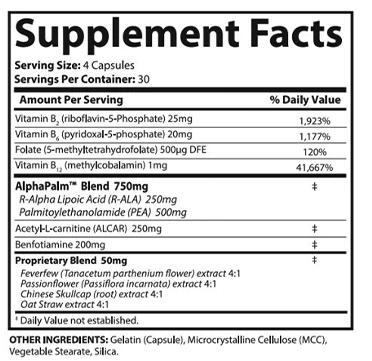
One ingredient has sciatica data behind it. In a 636-person trial, palmitoylethanolamide (PEA) at 300 or 600 mg a day lowered pain scores more than placebo over 3 weeks (Keppel Hesselink, J Pain Res 2015). Four SciatiEase capsules hold 500 mg; two hold 250 mg. The capsules themselves have never been tested in a trial.
Before adding anything, check it against what you already take. The supplements and medicines guide goes ingredient by ingredient.
A supplement does not replace a prescription. Keep every prescribed dose on schedule, and raise any change with the doctor who wrote it.
How SciatiEase is meant to work, and what the bottle claims, is on the how it works page.
FAQ08
SciatiEase questions people ask
What does sciatic nerve pain feel like?
Sciatic nerve pain often feels like a burning or shooting pain from the buttock down the back of one leg, sometimes like an electric jolt. Some people feel pins and needles, a numb patch of skin or a heavy leg instead. Long sitting, coughing or sneezing can make it flare.
What is the most common cause of sciatica?
A herniated disk in the lower back is the most common cause of sciatica. Disk material bulges out and presses on a nerve root. Spinal stenosis and piriformis syndrome are the other usual causes, according to MedlinePlus (MedlinePlus, Sciatica).
How long does a sciatica flare usually last?
Most sciatica flares settle within 4 to 6 weeks, often without medical treatment (StatPearls, Sciatica). Many people notice improvement in the first week. If pain has not eased after about 4 weeks, call your provider, and get care sooner for weakness, fever or bladder changes.
Can sciatica affect both legs at once?
Sciatica usually affects one leg. Pain, numbness or weakness in both legs at the same time is a red flag, especially with bladder or bowel changes or numbness between the legs. It can signal cauda equina syndrome and needs emergency care (AANS, Cauda Equina Syndrome).
Is sciatica the same as a pinched nerve?
Sciatica is one kind of pinched nerve. The term means symptoms along the sciatic nerve, usually because a root in the lower back is squeezed by a disk or a narrowed canal. A pinched nerve in the neck, for example, is not sciatica.
Can sitting too long make sciatica worse?
Yes, long sitting often makes sciatica worse, especially when a disk or the piriformis muscle is involved. Getting up every 30 to 60 minutes to walk a little helps many people. MedlinePlus advises against bed rest and favors a gradual return to activity (MedlinePlus, Sciatica).
Is there a supplement for sciatic nerve pain?
No supplement is approved to treat sciatic nerve pain. PEA has the best data: one large trial found 300 to 600 mg a day lowered pain scores over 3 weeks (Keppel Hesselink, J Pain Res 2015). Products that contain PEA, such as SciatiEase, have not been tested themselves.
Who wrote this09
Written and reviewed by
Pages built from the label, the official site, the sales page and linked NIH, FDA, FTC and peer-reviewed sources.
Last updated . Read our editorial standards and how we check reviews. This website is run by a SciatiEase authorized U.S. retailer, not by the manufacturer. We are paid a commission when you buy through our order links.
Keep reading
More about SciatiEase
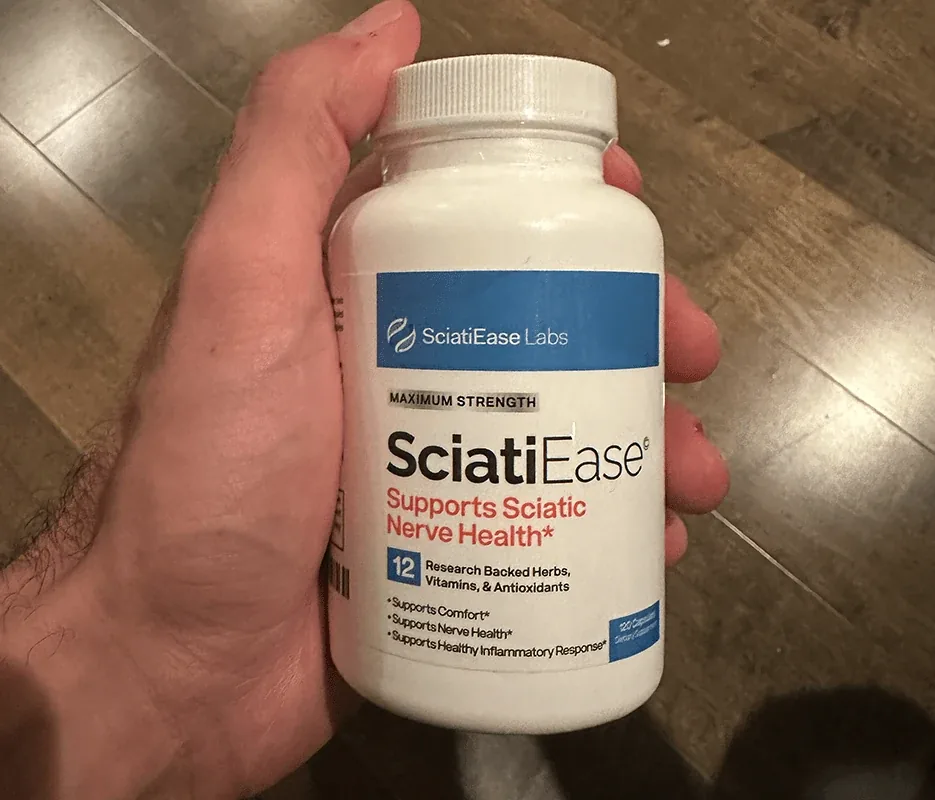
SciatiEase authorized U.S. retailer
Ready to try SciatiEase?
Start with a check of your medicines, then pick a pack. Three or six bottles ship free in the US and cost less per bottle, and the 180-day guarantee covers your order.

- Secure checkout on the brand site
- 180-day guarantee
- Ships from the U.S.